Hand-Carved Wooden Mirrors: Styles, Sizes and Where to Hang Them
How to pick the right style and size of hand-carved wooden mirror for the space it's going to live in.
The most common carving styles
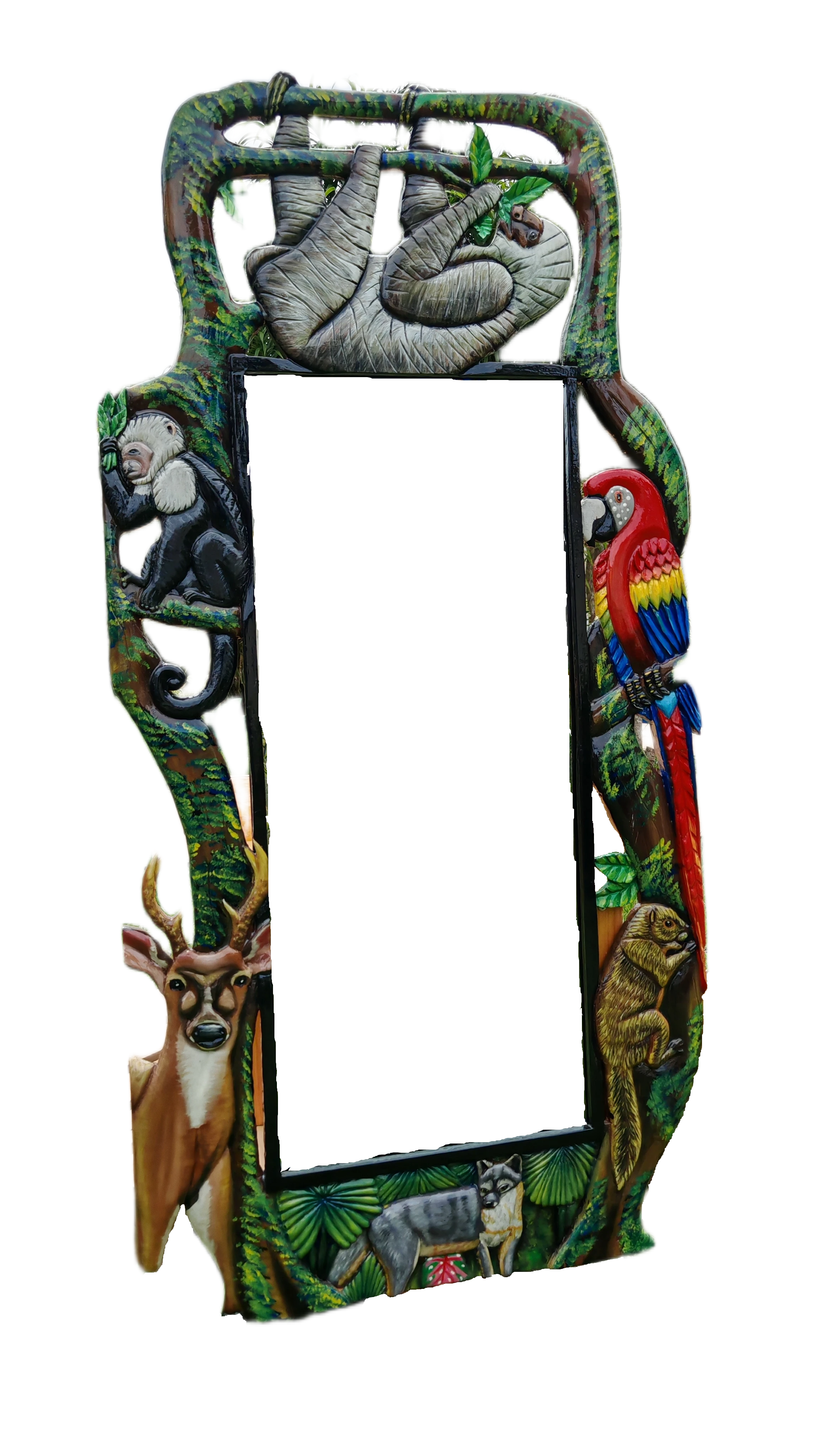
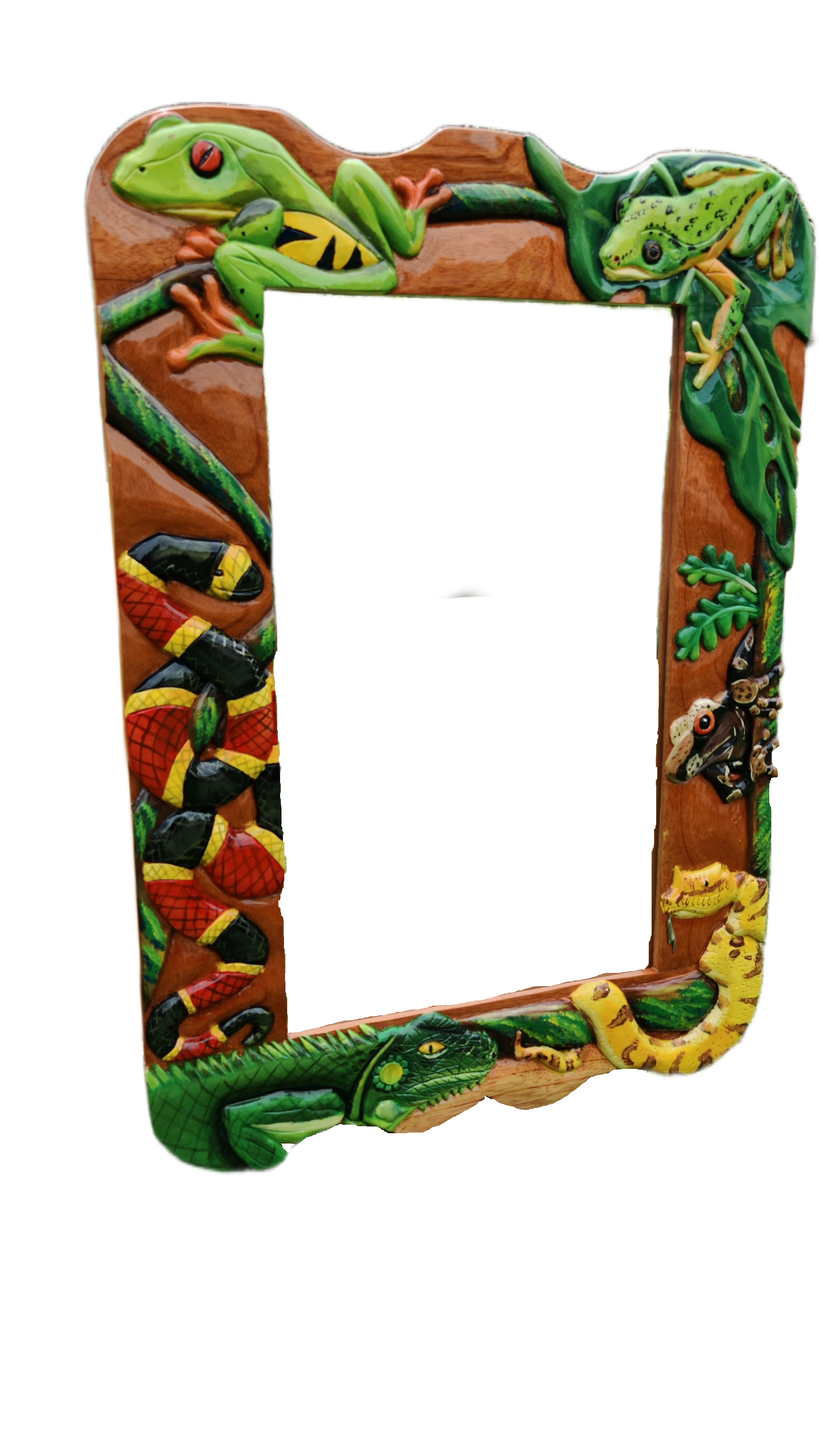
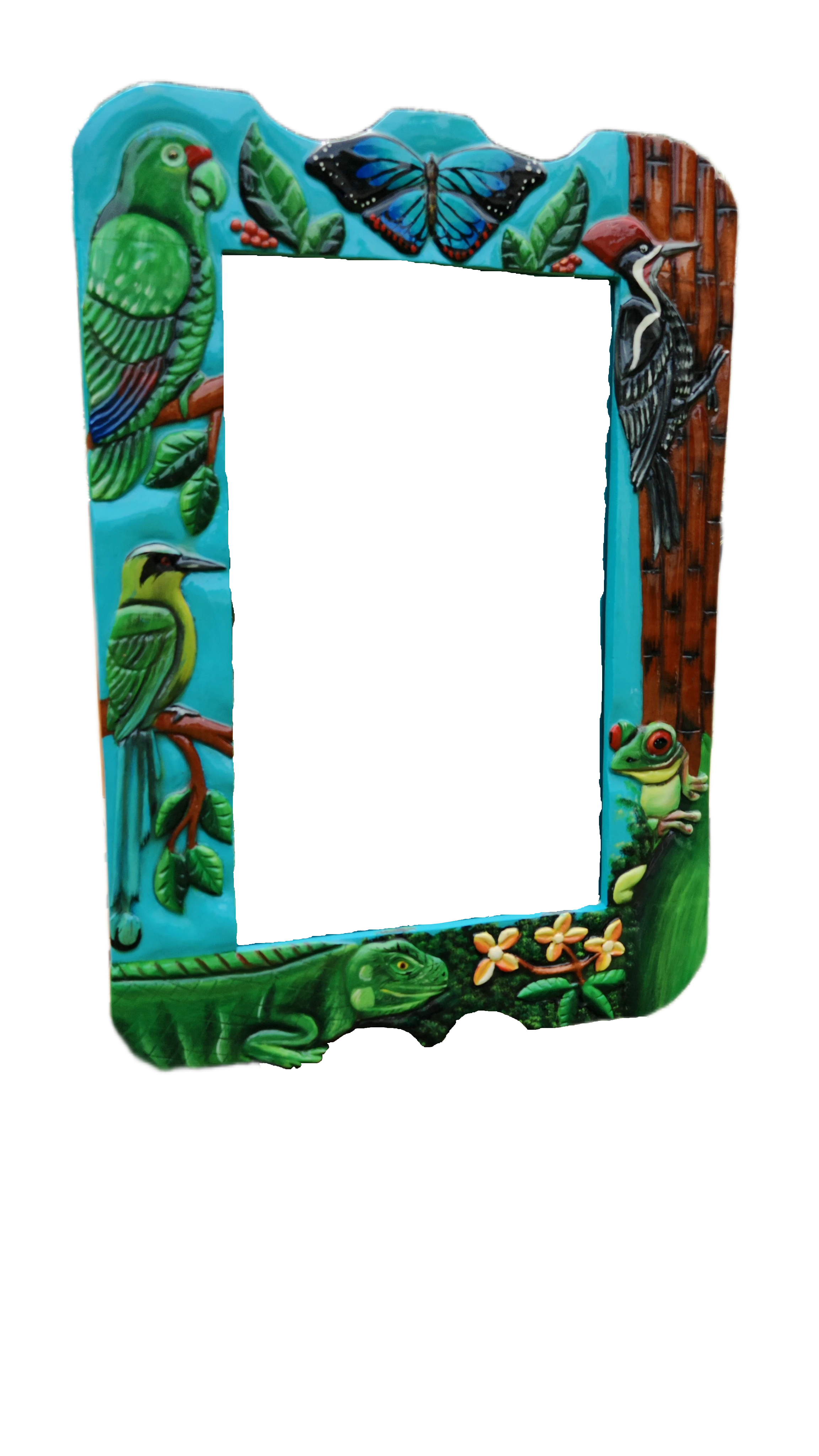
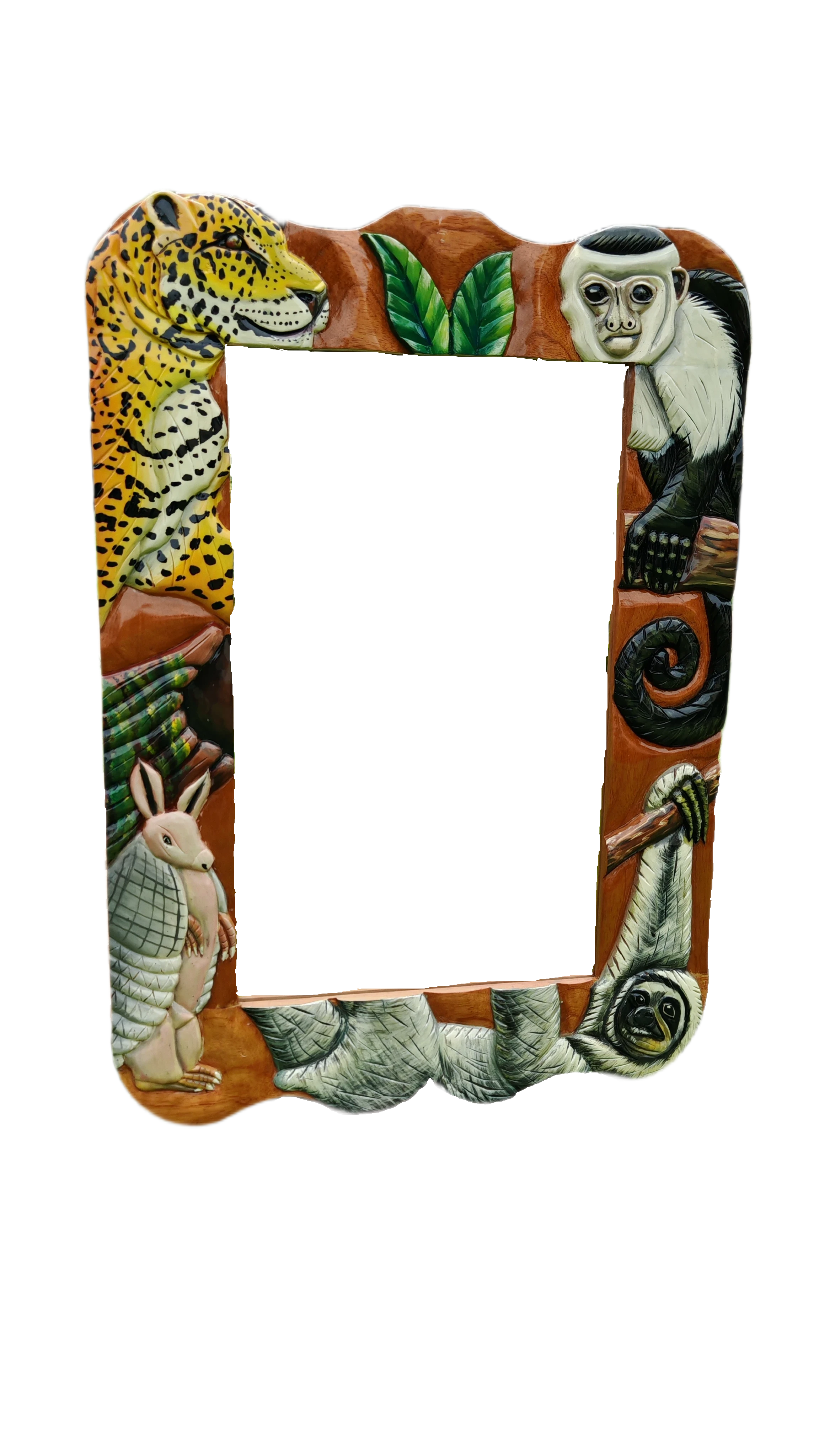
The hand-carved wooden mirrors from our workshop fall into three general styles. The first is geometric: straight lines, repeated angles and symmetrical patterns that work well in modern or minimalist spaces. The second draws from Costa Rica's tropical nature: leaves, vines and organic shapes that bring a warmer, more handmade feel to a room. The third is more figurative, with local wildlife motifs carved directly into the frame.
No style is objectively "better" — it depends on the rest of the décor. A space with simple, clean furniture benefits from a more organic frame to break up the rigidity, while a room already full of natural textures (wood, fiber, plants) might call for a geometric frame that brings visual order.
How to choose the right size
Before buying, measure the available wall space and subtract at least 4 inches on each side so the mirror doesn't look cramped. As a general rule, an entryway or hallway mirror works well between 16 and 24 inches wide; one meant as a centerpiece for a living room or bedroom can go from 24 inches up.
If the mirror will hang above a piece of furniture — a console, a dresser, a vanity — its width shouldn't exceed the furniture's width; ideally it should sit between 60% and 90% of that measurement to keep visual proportion. Every one of our pieces lists exact dimensions (height, width and sometimes frame depth) on its product page.
Where to hang it and how to install it properly
The standard height for hanging a mirror is with its center at average eye level, roughly 57 to 63 inches from the floor. In an entryway, a medium mirror facing the front door visually expands the space and is the most requested placement among our customers. In a narrow hallway, a tall, narrow mirror helps the corridor feel less closed in.
To install it, use anchors rated for the piece's real weight (carved wood is heavier than a plastic-framed mirror), and if the wall is drywall, find a stud or use expansion anchors certified for that weight. Avoid hanging it from a single point if the frame is wide — two anchor points distribute the weight better and keep the mirror from tilting over time.
Pairing it with the rest of your décor
A carved wood frame pairs well with warm metals — bronze, copper, aged gold — in nearby lamps or picture frames, and tends to clash visually with very cold finishes like polished chrome or bright stainless steel. If your space already has a lot of cool metal, a wood-framed mirror can be exactly the warm contrast it's missing.
Lighting matters too: placing a warm light source near the mirror (a wall sconce or a small lamp) brings out the carving's relief with soft shadows, while a cold, direct overhead light can visually flatten the detail. If the mirror hangs in a dim entryway, soft side lighting usually works better than a single overhead source.
If you want to build a mirror wall instead of hanging just one, combining two or three different sizes in the same carving style (all geometric, say) reads as more intentional than mixing equal sizes with very different styles. Leaving even spacing between each piece — roughly 3 to 4 inches — keeps the grouping looking curated instead of cluttered.
Whatever style or size you choose, measure twice before drilling — it's the step people skip most often, and the one that most determines whether the mirror ends up looking well-proportioned on the wall or not. A quick paper cutout taped to the wall beforehand can save you an unnecessary hole, and it only takes a couple of minutes to try before committing to a spot.